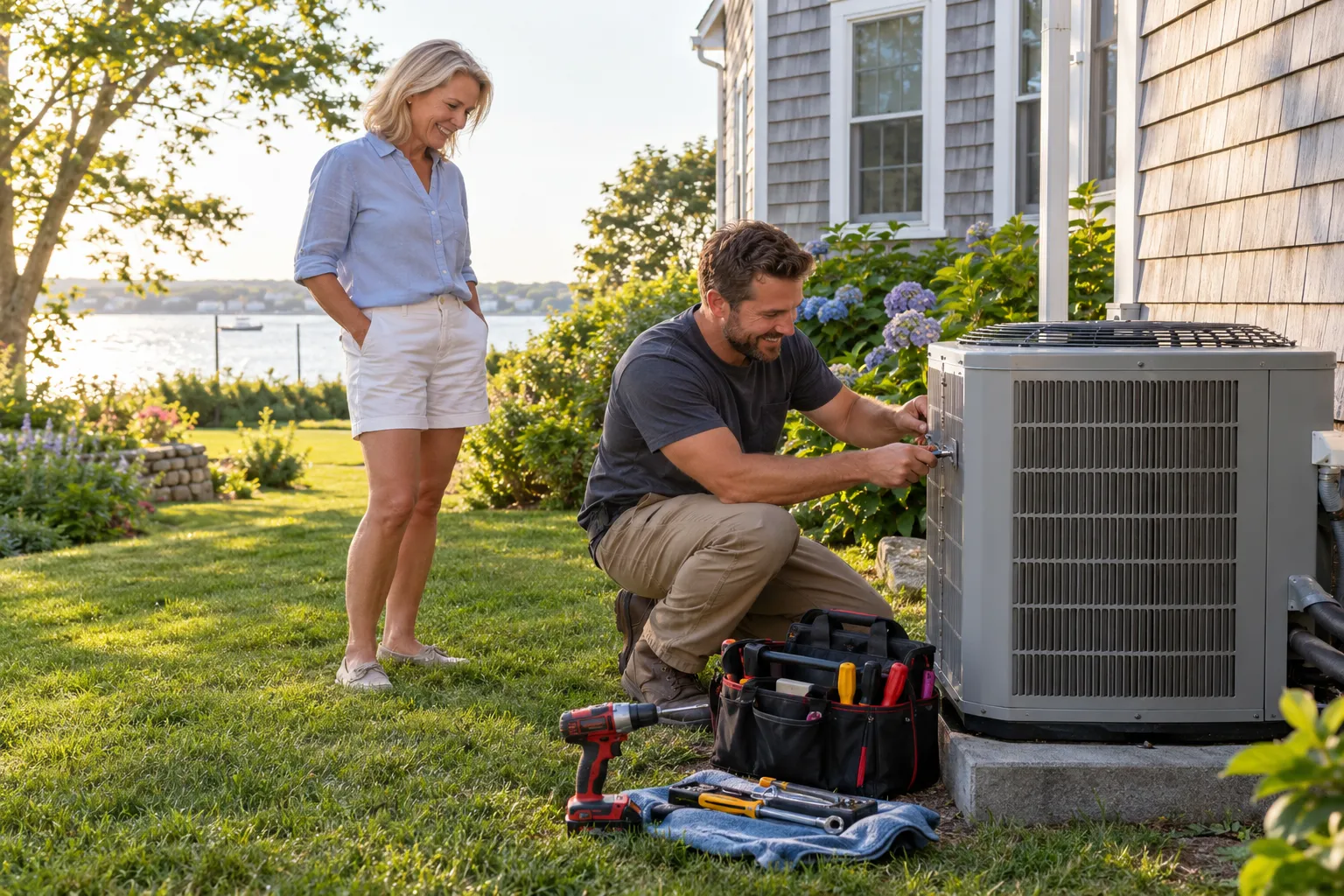
AC Repair for Homes That Stopped Cooling
Request your AC repair estimate
An air conditioner works like a sponge that carries heat out of your house. When a part wears out, the sponge stops working, and the rooms slowly warm up. The cause might be a tired electrical part, a clogged filter, a blocked drain, or a refrigerant leak. Each one looks a little different, and each has a different fix.
Newspaperreported Heating & Air is a referral service. We explain what is likely happening, how the season and local weather play a part, and what to check first. Then we connect you with independent HVAC providers in our network. The providers give the estimates and do the repair work. You compare, ask questions, and choose with no obligation. Estimate first, then decide at your own pace.
AC Stopped Cooling? Slow Down, Then Act
When the air from your vents turns warm, it is easy to panic. Try to pause first. An air conditioner does not create cold. It moves heat out of your house, much like a sponge carries water out of a bowl. When something blocks that job, the rooms warm up. Many causes are easy to spot, so a few quick checks can tell you a lot.
Step 1: Check the thermostat
Confirm it is set to cool and the target is a few degrees below the room reading. A blank screen often means dead batteries. This simple check solves more problems than most people expect.
Step 2: Look at the breaker and the filter
Find the AC breaker in your panel. If it tripped, reset it once. If it trips again, leave it off. Next, slide out the air filter. A clogged filter is like breathing through a thick scarf. The system strains and can ice up.
Step 3: Walk out to the outdoor unit
Is the fan spinning? Is the unit buried in leaves, packed snow, or standing water? Clear loose debris gently and keep two feet of open space around it. Never open the metal panels yourself.
Step 4: Shut it off if something seems wrong
Grinding, a burning smell, or ice on the pipes all mean stop. Turn the system off at the thermostat. Running a struggling unit can turn a small fix into a big one.
When Emergency AC Repair Makes Sense
Heat is more than discomfort for some households. Babies, older adults, and people with health conditions can get sick in a hot house. If anyone feels dizzy or unwell, move to the coolest room, drink water, and go somewhere cooler if needed.
For emergency AC repair, request a callback to check provider availability. Many providers can respond quickly, though hours vary by provider. You can also send the request form and compare estimates.
Why the Seasons Shape Your AC Repair
Think of your AC like a car parked all winter. It may look fine, yet the first long drive shows what wore down. Local weather decides when those problems appear.
Spring: waking a sleeping system
Snowmelt and repeated cold-and-thaw cycles can shift the outdoor pad, loosen lines, and leave damp air in older basements. Test the AC on a mild day before the first heat wave. A small issue found in spring is easier to schedule than one found in July.
Summer: heat waves and coastal storms
When the first hot week arrives, many homes need help at once, so waits can stretch. Storms bring power surges that can harm capacitors and control boards. Salty coastal air also wears on metal coils over the years.
Fall and winter: the quiet window
Providers usually have more room in the cooler months. If your AC struggled all summer, book the repair then. You will have time to compare estimates without a hot house pushing you to rush.
Older Homes Have Their Own Quirks
Many homes here are older, including Cape Cod styles and multi-family buildings. Upper floors can trap heat, and ductwork may be tight or patched. Think of ducts as hallways. A strong AC still struggles if the hallway is blocked. A careful provider looks at airflow, not just the unit outside.
Signs Your AC Needs Repair
Small clues often show up before a full breakdown. Watch for these:
- Warm air from the vents while the unit runs
- Weak airflow in some rooms but not others
- Squealing, buzzing, or clicking sounds
- Water pooling near the indoor unit
- Ice on the copper line or coil
- Higher energy bills with no change in habits
- A unit that turns on and off again and again
What Happens During an AC Repair Visit
Knowing the steps makes the visit less stressful. It works like a doctor appointment. Questions come first, tests come next, and then you get a plan.
The provider asks what you noticed and when it began. Then they inspect the indoor and outdoor units, test the electrical parts, and check refrigerant and airflow. They explain the cause in plain words and give you a written estimate. You decide whether to go ahead. Ask them to show you the worn part if they can.
Common AC Repairs
- Capacitor or contactor: small electrical parts that help the unit start. They wear out often.
- Fan motor: moves air across the coil. A failing one sounds loud or slow.
- Refrigerant leak: the leak should be found and sealed, not just topped off.
- Clogged drain line: water backs up and may shut the system down.
- Thermostat or wiring: the system gets mixed signals.
- Compressor: the heart of the unit. Repairs here cost more and often start the repair-or-replace talk.
Repair or Replace?
Here is a handy rule. If your unit is over 12 to 15 years old and the repair costs a big share of a new system, ask for both quotes. Think of an old car with a large repair bill. One fix may be worth it. Repeated fixes add up fast.
Older units may also use a refrigerant that is being phased out, which can make repairs pricey. Replacement is its own topic, and providers can walk you through it when the time comes.
Questions to Ask the Provider
- Can I get the estimate in writing before work starts?
- What caused the problem, and can you show me?
- Is there a warranty on the parts and the labor?
- Does the quote include testing after the repair?
- Did you notice anything else that may fail soon?
- Are you licensed and insured to work in my area?
Storm Damage and Your Policy
If a storm or power surge hurt your AC, some policies may cover sudden damage. Check your policy for details. Providers can often help document the damage for a claim. Take photos before anything is moved.
Ready to Request an Estimate?
Estimate first. That is the calm way to start. Tell us what your AC is doing, and independent providers in our network can reach out with options. You compare, you choose, and you owe nothing for asking.
What's Included
Cause Check
A provider finds out why the cooling stopped before suggesting any part or any fix.
Written Estimate
You get the price in writing so you can compare before work begins.
Part Repairs
Worn capacitors, fan motors, and contactors can be swapped when they are the cause.
Airflow and Drain Care
Clogged filters, blocked drain lines, and weak airflow get checked and cleared as needed.
Typical AC Repair Cost Ranges
These are typical U.S. ranges, and your job may land outside them. Age of the unit, parts, access, and season all change the price. Always ask for a written quote before you agree to any repair.
| Repair item | Typical range | Notes |
|---|---|---|
| Diagnostic visit | $75 – $200 | Often applied toward the repair |
| Capacitor or contactor | $120 – $450 | Common and quick to swap |
| Drain line clearing | $100 – $300 | Cost rises if the line is hard to reach |
| Fan motor replacement | $400 – $1,000 | Depends on motor type and unit size |
| Refrigerant leak repair | $200 – $1,500 | Varies with leak location and refrigerant type |
| Compressor replacement | $1,200 – $2,800 | Often compared with a new system |
How It Works
Tell Us What Happened
Share what your AC is doing, when it started, and anything you already checked, like the filter or breaker.
Get Matched With Providers
Independent providers in our network review your request and reach out to you.
Compare Estimates
Look at the written quotes, ask your questions, and pick what fits.
Provider Does the Repair
The provider you choose schedules the visit and fixes the cooling problem.
Why Call Newspaperreported Heating & Air
Plain Answers
We explain what is probably happening and why, so you walk into the conversation with a provider feeling prepared.
Independent Providers
Local HVAC providers in our network give the estimates and do the repair work themselves.
Season Aware
Our advice fits local weather, from spring snowmelt to summer storms and coastal air.
No Obligation
Ask for an estimate, compare your options, and decide when you are ready.
Other Services
Need ac repair in Jersey City?
Tell us what your system is doing. Request an estimate and a local provider in our network can follow up. No obligation.
No obligationAC Repair FAQ
- Why is my AC running but blowing warm air?
- Common causes include a dirty filter, a tripped breaker on the outdoor unit, low refrigerant from a leak, or a failed electrical part. Check the filter and thermostat first, then ask a provider to inspect it.
- How much does AC repair cost?
- Typical U.S. repairs run from about $100 for small fixes to over $1,500 for bigger parts. Costs vary by job, so ask for a written quote before approving any work.
- Should I repair or replace my old air conditioner?
- If the unit is over 12 to 15 years old and the repair is costly, ask for both quotes. A newer unit may be easier on your budget over time.
Reach a local provider
Tell us what your system is doing. Request an estimate and a local provider in our network can follow up. No obligation.
No obligation